

History of Sign Languages

8 entries across 2 languages

FSL

1590s — EARLIEST DOCUMENTED RECORD
FSL

1590s — EARLIEST DOCUMENTED RECORD

One of the earliest recorded references to sign language in the Philippines dates back to the 1590s in Dulag, Leyte, where a priest documented encounters with local Deaf people and their use of signs.

Photo: Since there isn’t a known surviving photograph from the 1590s, use a historical/representational image of Dulag, Leyte or early Philippine history, and clearly label it as an illustration, rather than implying it is an actual image of FSL from 1590.
Establishment of Philippine Deaf Education — 1907
FSL

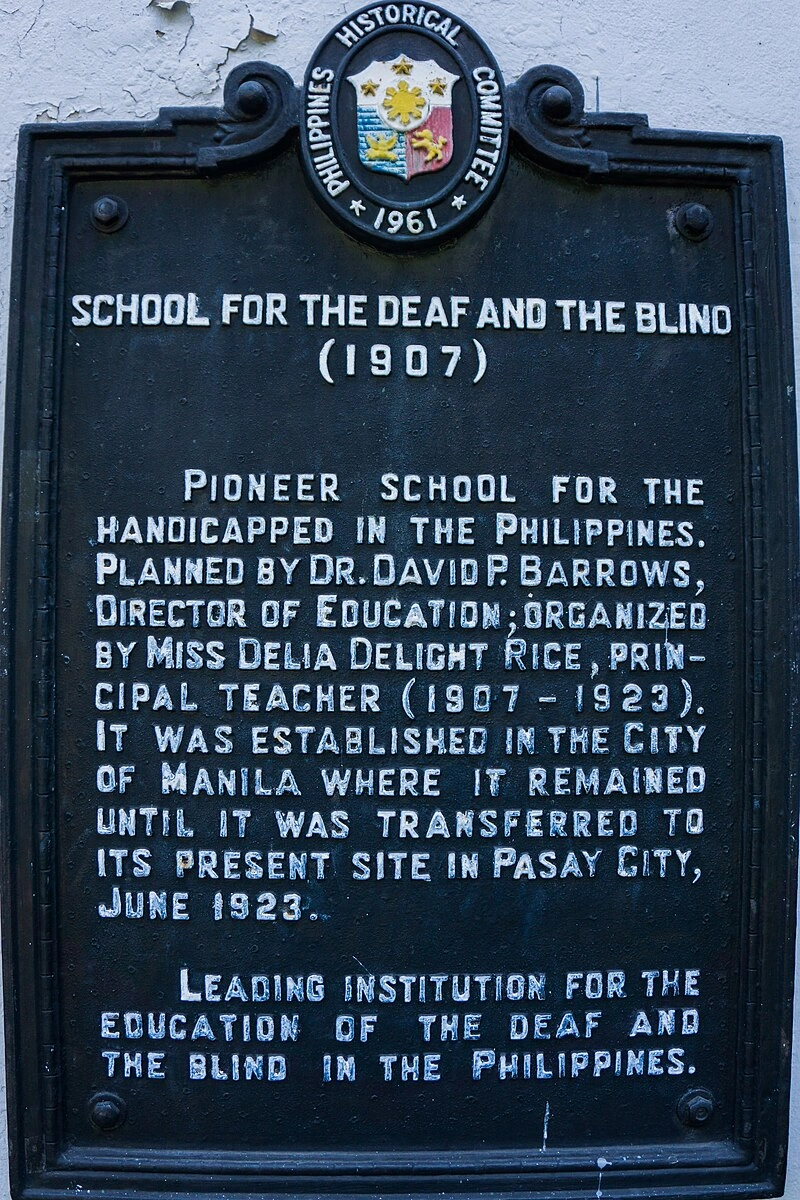
Establishment of Philippine Deaf Education — 1907

n 1907, the Philippine School for the Deaf (then the School for the Deaf and Blind) was established. Dr. David P. Barrows invited Delia Delight Rice, a teacher of Deaf students from Ohio, to the Philippines. The first class consisted of only three pupils—two Deaf and one blind.

This became a major institution in the development of Deaf education in the Philippines.

FSL Becomes Recognized in Education — 2012–2013
FSL

FSL Becomes Recognized in Education — 2012–2013

A major step toward formal recognition came in 2012, when DepEd issued DepEd Order No. 40, s. 2012, recognizing FSL as the preferred language of instruction for Deaf learners.

This was followed by Republic Act No. 10533, the Enhanced Basic Education Act of 2013, which recognized Filipino Sign Language in the education of Deaf learners. These developments preceded the eventual FSL Act.

Filipino Sign Language Act — 2018 to Present
FSL

Filipino Sign Language Act — 2018 to Present

Filipino Sign Language Act — 2018 to Present

On October 30, 2018, President Rodrigo Duterte signed Republic Act No. 11106, officially known as the Filipino Sign Language Act. The law declared FSL the national sign language of the Filipino Deaf and the official sign language of government transactions involving Deaf people. It also mandated FSL’s use in education, workplaces, broadcast media, and the justice system.

The law’s implementation has continued to develop. In December 2025, the Supreme Court approved the Rules on Filipino Sign Language Interpreting in the Judiciary, which took effect December 15, 2025, establishing rules for FSL interpreting in court proceedings involving Deaf Filipinos.

ASL

Early Foundations of ASL — Before 1817
ASL

Early Foundations of ASL — Before 1817

Before the establishment of formal Deaf education in the United States, different communities already used visual forms of communication. A particularly important influence came from French Sign Language (LSF). In 1816, Laurent Clerc, a Deaf teacher from France, arrived in the United States with Thomas Hopkins Gallaudet. Gallaudet learned sign language from Clerc, while Clerc learned English from Gallaudet. Their interaction, combined with existing signs used in American Deaf communities, contributed to the development of what became American Sign Language.

Timeline text:

BEFORE 1817 — EARLY FOUNDATIONS
American Sign Language developed from a combination of French Sign Language and existing sign systems used by Deaf communities in America. Laurent Clerc brought French Sign Language traditions to the United States, which later became part of the development of ASL.

The Establishment of the American School for the Deaf — 1817
ASL

The Establishment of the American School for the Deaf — 1817

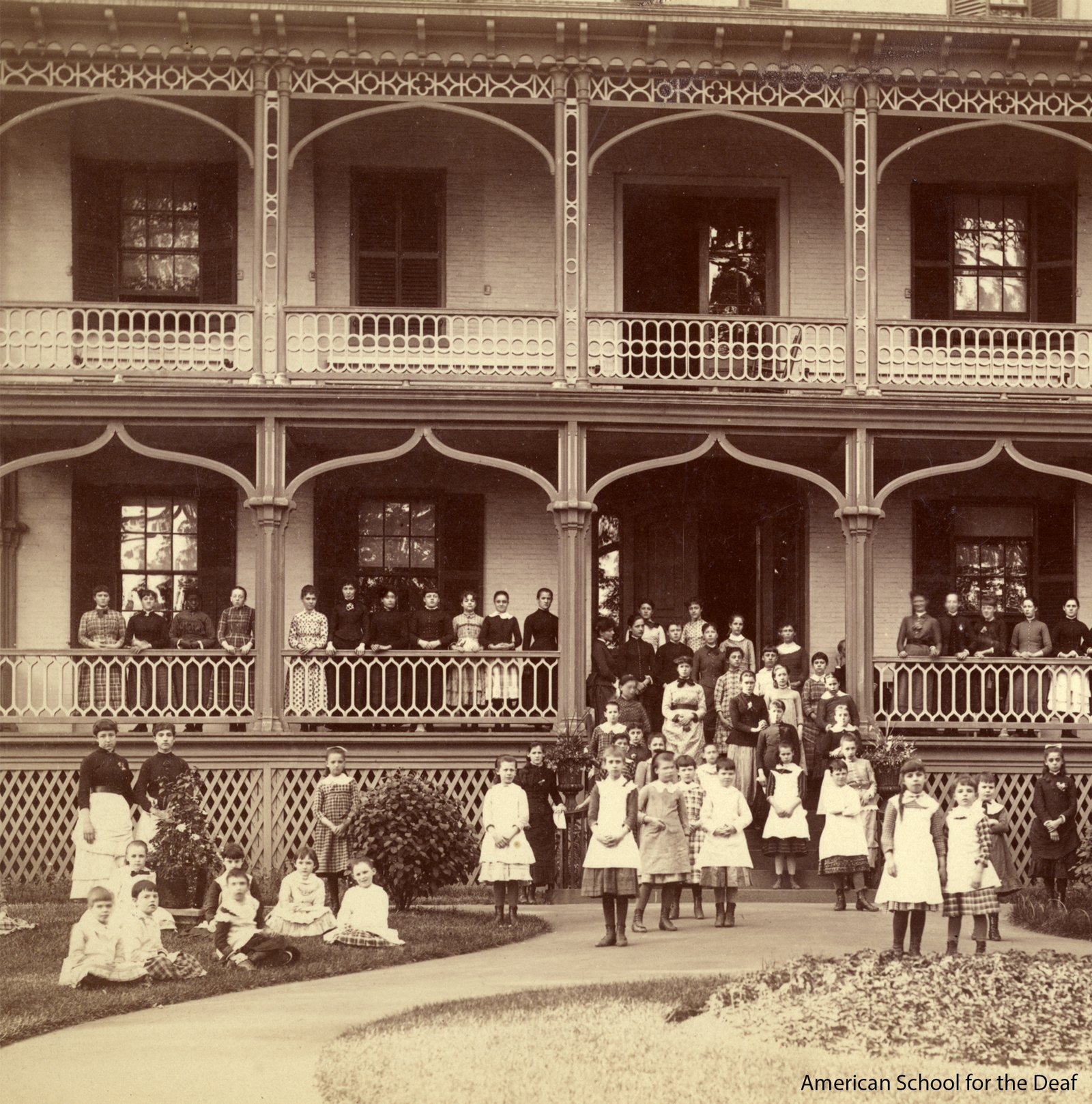
On April 15, 1817, Thomas Hopkins Gallaudet, Laurent Clerc, and their colleagues established the first permanent school for Deaf children in the United States in Hartford, Connecticut. It later became known as the American School for the Deaf. Students brought different signing traditions to the school, and these interacted with the French-influenced signs taught by Clerc. This environment played an important role in the development of ASL.

Timeline text:

1817 — AMERICAN SCHOOL FOR THE DEAF
The first permanent school for Deaf children in the United States opened in Hartford, Connecticut. Laurent Clerc and Thomas Hopkins Gallaudet helped establish the school, creating an important environment for the development and spread of American Sign Language

The Gallaudet page specifically includes an early photograph of students in front of the Old Hartford building, dating to approximately the 1890s

ASL Faces the Oralism Period, Then Gains Linguistic Recognition — 1880–1960
ASL

ASL Faces the Oralism Period, Then Gains Linguistic Recognition — 1880–1960

In 1880, the International Congress on the Education of the Deaf in Milan voted in favor of oral education rather than sign-based education. This influenced Deaf education internationally and contributed to restrictions on signing in many schools.

A major change came in 1960, when William C. Stokoe published Sign Language Structure: An Outline of the Visual Communication System of the American Deaf. His research demonstrated that ASL had linguistic structure, including distinct parameters such as handshape, location, and movement. His work helped establish ASL as a legitimate language rather than simply a collection of gestures.

Timeline text:

1880–1960 — FROM SUPPRESSION TO LINGUISTIC RECOGNITION
The 1880 Milan Congress promoted oral education, causing sign language to be restricted in many Deaf schools. Decades later, William C. Stokoe's 1960 linguistic research demonstrated that ASL has its own structure and grammar, helping establish ASL as a natural language.

ASL Today — 1965 to Present
ASL

ASL Today — 1965 to Present

Following Stokoe's work, A Dictionary of American Sign Language on Linguistic Principles was published in 1965 by William C. Stokoe, Dorothy Casterline, and Carl Croneberg. The dictionary further supported linguistic study of ASL.

ASL has since become widely studied and used in Deaf education, interpreting, research, and public life. Gallaudet University notes that ASL's academic recognition contributed to increased use of sign-language interpreters, ASL courses, Deaf educators, and greater public visibility of the language.

Timeline text:

1965–PRESENT — ASL TODAY
The publication of A Dictionary of American Sign Language on Linguistic Principles in 1965 strengthened the academic study of ASL. Today, ASL is widely used by Deaf communities and is studied in education, linguistics, interpreting, and Deaf culture.